
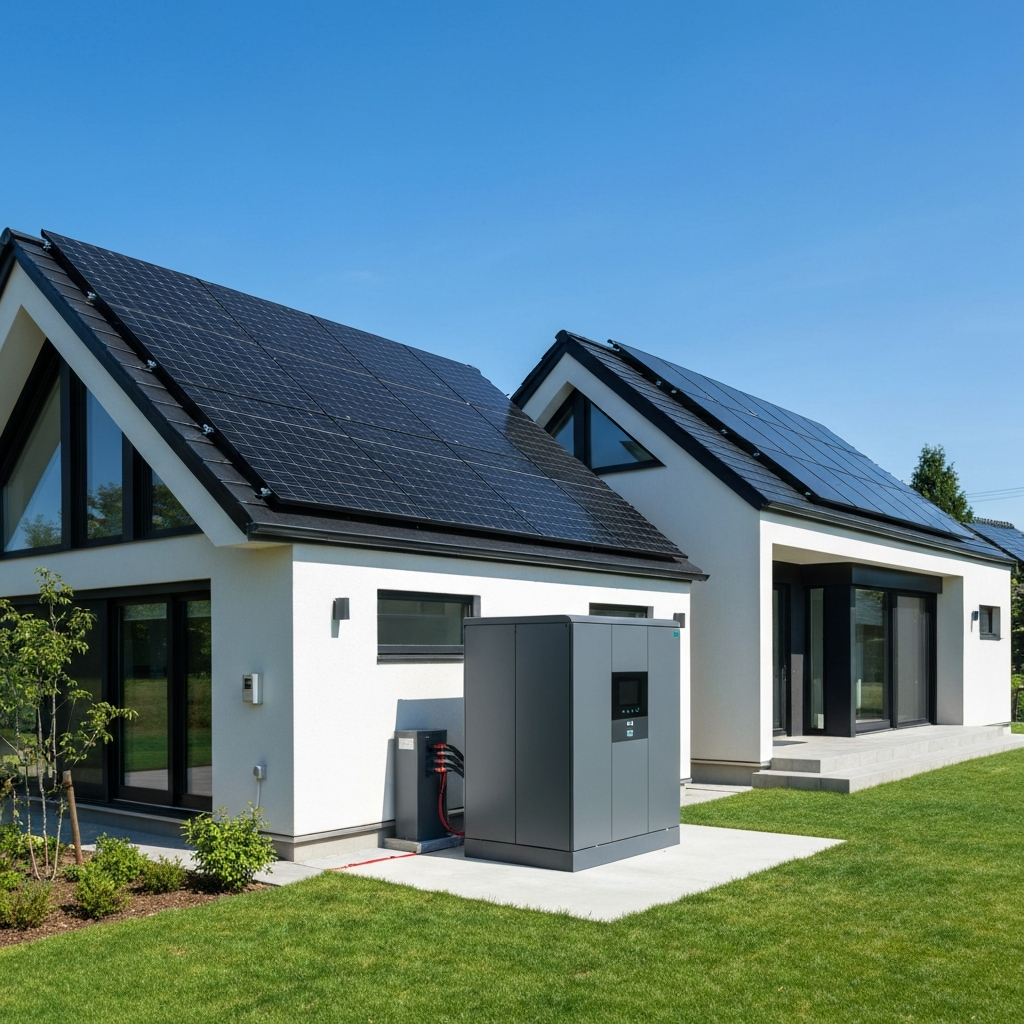
Installing top-tier solar panels and lithium-ion battery storage ensures your Johannesburg property remains powered during severe outages. High-capacity PV systems capture Highveld sunlight efficiently to charge your backup reserves for evening use.
Surviving Highveld Weather with Tier 1 Hardware
Highveld thunderstorms and extreme temperature fluctuations cause standard solar equipment to degrade rapidly. To protect your investment, you need robust tier-1 panels and industrial-grade hardware designed to withstand severe impact and intense UV radiation.
To ensure long-term performance in local conditions, we prioritize:
- Hardened PV Glass: Resists high-velocity hail impact and prevents micro-cracking.
- Reinforced Aluminium Frames: Provides structural support to prevent warping.
- SABS-Approved Mounting: Rated for high-wind endurance and roof integrity.
- UV-Stabilized Cabling: Prevents insulation degradation under the harsh sun.
Using weather-rated components prevents efficiency loss and catastrophic roof leaks, ensuring your system remains secure and functional despite the challenging climate.
Managing Thermal Derating
Solar efficiency drops as surface temperatures rise. The intense Johannesburg sun often pushes rooftop temperatures well above ambient levels. High-quality monocrystalline panels maintain higher voltage outputs even when baking in December heat. This thermal stability ensures your solar battery storage charges fully before the afternoon clouds roll in.
PV Systems and Solar Battery Storage Integration
A robust PV system is only as effective as its storage solution’s ability to handle sudden load spikes. When the grid drops, your property instantly shifts its entire electrical demand to the battery bank; if the storage capacity is undersized, the system will trip immediately. Modern energy demands require precise calculation of both continuous and peak current draws.
We specify industrial-grade hybrid solar systems designed to handle transient surges effortlessly. Achieving this stability requires a three-step integration approach:
- Peak Load Calculation: Determining the exact surge current required by inductive loads like pumps and motors.
- Inverter-Battery Synchronization: Establishing a dedicated communication protocol between the inverter and the BMS (Battery Management System).
- Automated Load Prioritization: Programming the system to manage essential circuits and high-draw appliances via dedicated contactor switches.
Optimizing Load Management and Battery Technology
Reliability depends on matching the discharge rate of the battery to the continuous draw of your essential appliances. Connecting heavy loads like a geyser or oven to a standard residential inverter requires dedicated contactor switches and careful load management programming.
For these installations, we utilize advanced lithium iron phosphate technology. These units are preferred over older lead-acid alternatives because they tolerate deep discharge cycles and offer a significantly lower failure rate. This technical integration ensures that high-demand components receive steady power without compromising the longevity of the system.
Essential Component Matching
The communication protocol between your solar inverters and battery bank dictates system stability. Mismatched brands often fail to sync during voltage fluctuations. Ensure your setup includes:
- Matched hybrid solar systems with integrated battery management protocols.
- Heavy-duty DC disconnect switches for safe maintenance.
- Surge protection devices rated for direct lightning strikes.
Secure Your Property with Power Plus Electrical
Stop wasting money on temporary fixes and failing equipment. You need industrial-grade hardware installed by veterans who understand the local climate and grid conditions. Professional engineering provides the peace of mind that your home will stay powered safely. Contact us today for a detailed site inspection and transparent quote.
FAQs
How much does a 5kW solar system cost in Johannesburg?
A standard 5kW system with lithium battery backup typically ranges between R80,000 and R120,000 depending on the battery capacity and inverter brand chosen. This covers the hardware, safety switchgear, and professional installation required for compliance.
Do I need a permit or municipality approval for solar panels in South Africa?
Yes. If your system is grid-tied or hybrid, you must register the installation with City Power or your local municipality. A registered wireman must also issue a Certificate of Compliance to ensure the setup is legally safe.
What is the best solar backup power solution for load shedding?
A hybrid inverter paired with a lithium iron phosphate battery provides the most reliable backup power. This setup automatically isolates your property from the grid during an outage and powers your essential circuits without interruption.