
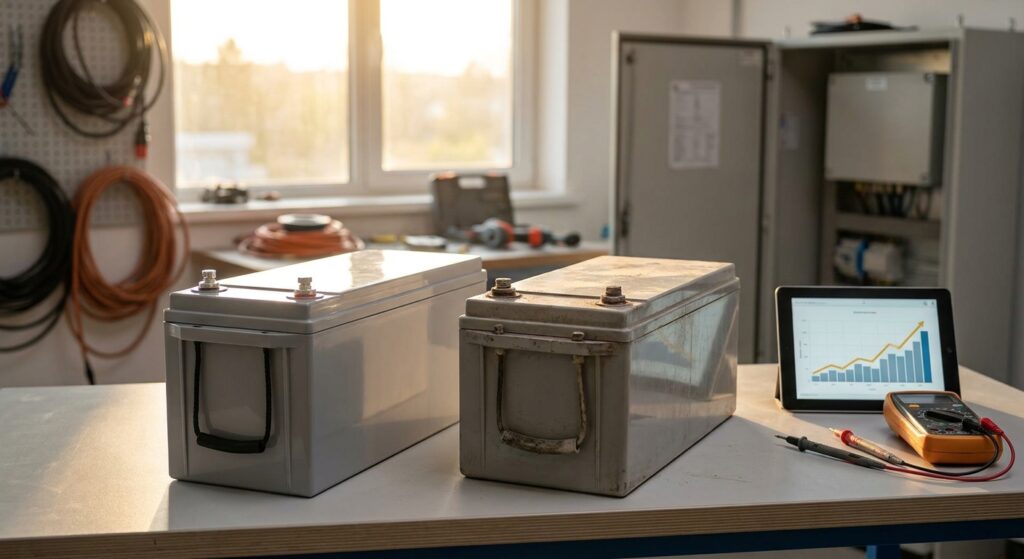
A lithium-ion solar battery typically lasts 10 to 15 years in South African conditions. Manufacturers guarantee performance for 6,000 to 10,000 cycles at a specific depth of discharge. Lead-acid alternatives offer a shorter lifespan of 3 to 5 years before chemical degradation limits utility. Power Plus Electrical configures these systems to survive the high-frequency cycling caused by local grid instability.
The Mechanics of Battery Cycle Life
Battery longevity is determined by chemical cycle counts rather than simple calendar years. Each time a battery discharges and recharges; the internal cells undergo a chemical reaction that slightly increases internal resistance. Lithium Iron Phosphate chemistry is engineered to withstand these transitions for several thousand cycles before the capacity drops below 80 percent of its original rating.
Several technical variables dictate how quickly these cycles are consumed:
- Depth of discharge settings that limit how low the battery voltage drops.
- Charge rates that determine the speed of energy intake from the inverter.
- Ambient temperature levels within the installation area that affect chemical stability.
Managing these factors prevents premature cell failure and ensures the hardware reaches its maximum rated lifespan.
Chemistry and Degradation Rates
Lead-acid batteries degrade faster due to sulphation during periods of low solar production. When lead-acid cells remain in a discharged state; lead sulphate crystals harden on the plates and permanently reduce the ability to store energy. Lithium-ion systems avoid this specific failure mode; which allows them to remain at low charge levels without immediate damage.
Lithium Iron Phosphate Performance
LiFePO4 cells maintain high efficiency even when discharged to 90 percent of their capacity. This chemical robustness allows for more usable energy without destroying the cell chemistry over time.
Environmental Stressors in South Africa
Heat is the primary enemy of energy storage systems in South African climates. When a battery operates in an unventilated area; the internal resistance increases and accelerates the breakdown of the electrolyte. Regular load-shedding also forces the battery to cycle more frequently than intended by standard European design specifications.
To maximise the operational life of your hardware; consider these technical requirements:
- Passive or active ventilation systems to manage operational heat.
- Firmware updates that optimise charging profiles for local grid conditions.
- Inverter settings that prevent the battery from reaching a zero percent state of charge.
Precision Solutions with Power Plus Electrical
Predicting the exact lifespan of your solar storage requires a detailed analysis of your daily energy consumption and peak loads. Power Plus Electrical provides technical assessments to ensure your system is configured for maximum longevity. Visit our contact form to request a professional site evaluation. Click the button below to get a quote and secure your energy future.
FAQs
Does load-shedding shorten battery life?
Frequent power outages increase the number of daily cycles; which depletes the total cycle count faster than standard use. If a battery is rated for 6,000 cycles and you cycle it twice daily during high-stage load-shedding; the functional lifespan decreases accordingly.
Can I mix old and new batteries?
Adding new cells to an older bank is discouraged because the older units have higher internal resistance. The system will likely balance to the lowest performing cell; causing the new battery to degrade at an accelerated rate.
What is depth of discharge?
Depth of discharge refers to the percentage of the battery capacity that has been used relative to its total capacity. Keeping this level above 20 percent for lithium batteries significantly extends their functional years compared to total depletion.
How do I know when a battery needs replacing?
You will notice the battery fails to hold a charge through the night or during short outages. Most smart inverters will also trigger a low-capacity alarm or show a significant drop in the state-of-health metric on the monitoring application.