
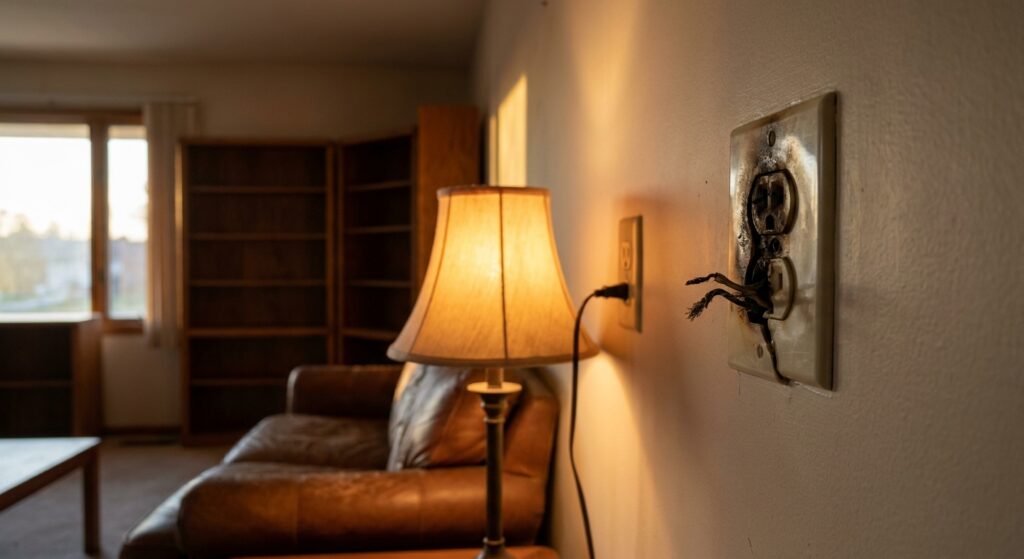
Persistent flickering lights, frequent circuit breaker trips, and a faint burning odour are the most common signs of faulty electrical wiring. These symptoms often point to overloaded circuits or degraded wire insulation, which can present an immediate fire hazard in your home.
Identifying the Core Warning Signs
These are not minor annoyances; they are direct warnings that your home’s electrical system is under strain or failing. Recognising these signals early is essential for preventing electrical fires and ensuring your family’s safety. Pay close attention to consistent or combined symptoms.
Key indicators of compromised wiring include:
- Flickering, buzzing, or dimming lights, particularly when a large appliance like a geyser or stove turns on.
- Circuit breakers that trip repeatedly or fuses that blow frequently without an obvious cause.
- Discolouration, scorch marks, or a noticeable warmth around switches and plug sockets.
- A persistent burning smell, often acrid like plastic or fishy, that you cannot trace to a specific source.
- Experiencing a mild shock or tingling sensation when touching an appliance, switch, or tap.
The Root Cause of Wiring Failure
The primary cause of wiring faults is typically age-related degradation. Older South African homes often have outdated wiring systems that were not designed for modern electrical loads. Over time, insulation becomes brittle and cracks, exposing the copper conductor.
Impact of Load-Shedding and Overloading
Constant power cycling from load-shedding puts significant stress on your entire electrical installation. The surge of current upon power restoration can cause arcing across exposed or weakened wiring, creating a fire risk in your roof space or wall cavities. Furthermore, running multiple modern appliances on circuits designed decades ago leads to overheating and progressive damage.
Professional Solutions and Prevention
A permanent solution requires a diagnostic assessment by a certified professional. Our technicians perform a systematic fault-finding process to identify the exact point of failure and determine the extent of the risk. Simply replacing a faulty switch often ignores the dangerous root cause.
Our certified residential inspection process includes:
- A comprehensive assessment of your Distribution Board (DB board) for compliance and safety.
- Load testing on individual circuits to detect overloads or earth leakage faults.
- A visual inspection of wiring integrity in accessible areas like the roof void.
- Issuing a report on findings and a Certificate of Compliance (CoC) upon completion of any remedial work.
Book a Call-Out with Power Plus Electrical
As the Senior Master Technician at Power Plus Electrical, I urge you not to ignore these warning signs. Our teams are fully equipped with the diagnostic tools to safely trace faults and ensure your home’s wiring meets all current South African residential standards. Deferring a professional inspection often leads to far more expensive damage from an electrical fire or appliance failure. Get a quote or request a call-out using the button below.
FAQs
Is it safe to replace a discoloured plug socket myself?
No. Discolouration is a sign of overheating, which is caused by a deeper issue like a loose connection or an overloaded circuit. Replacing the socket without addressing the root cause creates a false sense of security and leaves the fire hazard active within your wall.
How does load-shedding damage my wiring?
The repeated inrush of current when power returns after an outage, known as a power surge, can seriously stress old or damaged wiring. This can cause insulation to break down faster and may lead to arcing between exposed wires, which is a primary cause of electrical fires.
Why do my lights dim when I use the microwave?
This often indicates that the appliance is on an overloaded circuit, sharing it with your lights. The high power draw of the microwave causes a temporary voltage drop. While common in older homes, it suggests your circuits are not adequately designed for your current electrical needs and should be inspected.