
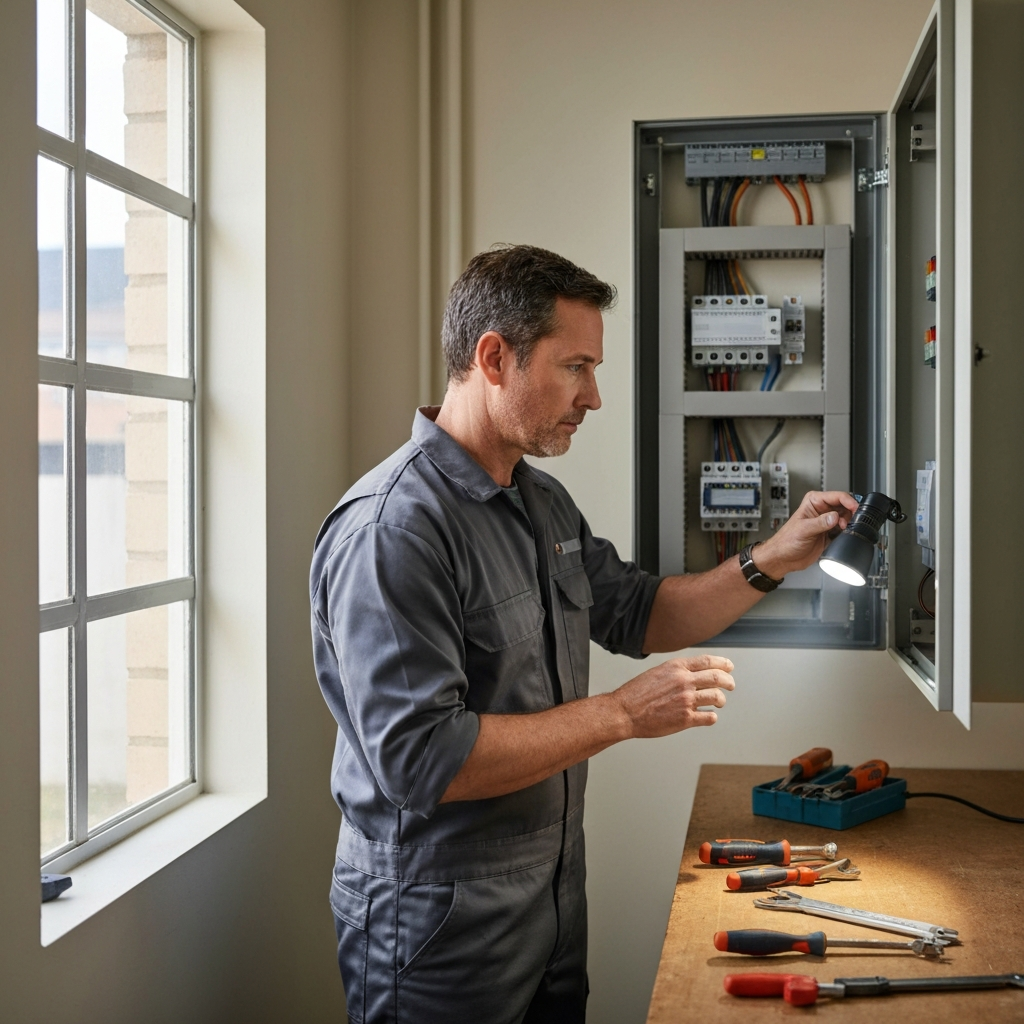
Wiring upgrades and heavy equipment installations require strict adherence to mechanical load limits. Professional house rewiring services eliminate the severe fire hazards associated with DIY electrical tampering.
The Severe Risks of DIY Electrical Modifications
Tinkering with your property wiring is a high-risk gamble that frequently ends in structural fires. DIY enthusiasts lack the specialised testing equipment required to verify earth loop impedance. Improper electrical modifications often lead to:
- High-Resistance Joints: Created by improper wire twisting and tape, which generate immense heat.
- Thermal Overloads: Caused by a mismatch between wire gauge thickness and circuit breaker ratings.
- Insulation Failure: Poor connections quickly melt surrounding insulation, exposing live wires.
- Wall Cavity Fires: Heat buildup behind plastered walls that can go unnoticed until it is too late.
Modern electrical installations require exact wire gauge sizing based on the specific amperage of the circuit breaker. A mismatch here guarantees an eventual failure that will destroy your infrastructure.
Insulation Degradation and Arc Faults
Older properties across the region suffer from brittle wire insulation that cracks upon movement. Attempting to install a new light fitting on decaying wires often causes shorts within the ceiling cavity. Professional panel and wiring upgrades remove these legacy hazards through a methodical replacement process:
- Insulation Resistance Testing: Confirming whether existing infrastructure is safe to handle modern loads.
- Guided Cable Extraction: Using heavy-duty lubricants and industrial fish tapes to replace cables without damaging conduits.
- Circuit Verification: Testing every new connection to ensure zero leakage and proper grounding.
- Legacy Hazard Removal: Stripping out cracked, decaying wires that pose an invisible fire risk.
Only professional testing can confirm whether your existing infrastructure is structurally safe to handle modern electrical demands.
Engineering Robust Heavy-Duty Installations
Installing heavy equipment like solar inverters or industrial machinery demands precise load balancing. A standard domestic circuit cannot support the continuous current draw of a large heat pump or electric vehicle charger. The neutral wire must be sized correctly to handle return currents without overheating. Upgrading a distribution board involves installing separate earth leakage protection for critical circuits to prevent nuisance tripping. You need a highly stable foundation to support the heavy electrical demands of a modern household or facility. Proper system design ensures longevity and mechanical safety.
Precision Load Balancing Techniques
Distributing the electrical load evenly across available phases prevents main breaker failure. An imbalanced system causes excessive voltage drops and heavily damages sensitive electronic motors.
- Calculate the total continuous load accurately before sizing the main incoming circuit breaker.
- Install dedicated, isolated circuits for heavy-draw appliances to prevent localized voltage sag.
- Use strictly corrosion-resistant terminals in outdoor sub-panels exposed to Highveld rain.
Only a certified professional possesses deep technical knowledge to execute these heavy installations safely. Relying on expert contractors guarantees your new equipment operates at peak efficiency without risking a catastrophic electrical fire.
Secure Your Property with Power Plus Electrical
Upgrade your legacy wiring before it fails under modern loads. Professional installations guarantee decades of reliable performance. Contact us today for a detailed site inspection and transparent quote.
FAQs
What types of commercial and residential electrical services do you offer?
We offer complete house rewiring services, heavy-duty machinery installations, solar panel integration, and specialized panel upgrades to support modern electrical loads.
Do you issue valid Electrical Certificates of Compliance (COC)?
Yes. After finishing any major rewiring project or installation, we conduct full mechanical testing and issue the required legal compliance documentation.
How much does an electrician charge per hour in Johannesburg?
The cost of installation work is generally quoted as a fixed project price rather than an hourly rate. This fixed quote accounts for wire pulling labour, conduit chasing, and premium switchgear components.